
 English
 한국어
한국어 Tiếng Việt
 中文
中文

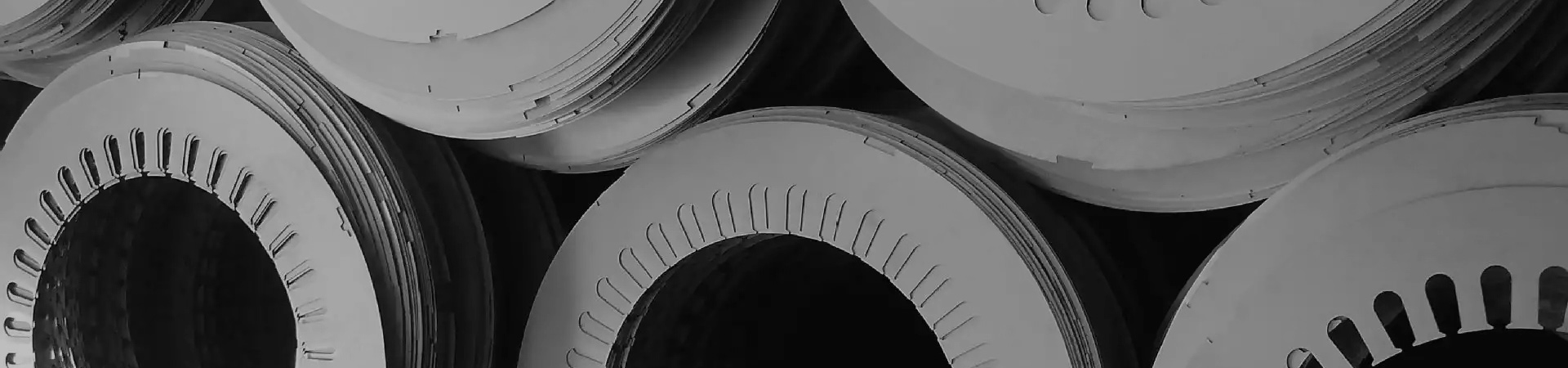
High-precision Y1 motor laminations materials
High-Precision Y1 Motor Laminations Materials High-precision Y1 motor laminations are critical components in electric motors, ensuring efficient energy conversion, reduced energy losses, and enhanced performance. The materials used for these laminations must meet stringent requirements, including high magnetic permeability, low core loss, excellent mechanical strength, and superior thermal stability. Key Material Characteristics 1. Electrical Steel (Silicon Steel) The most common material for Y1 motor laminations is non-oriented electrical steel, typically containing 1-3% silicon. Silicon reduces eddy current losses by increasing resistivity while maintaining high magnetic permeability. High-grade electrical steel ensures minimal hysteresis and eddy current losses, improving motor efficiency. 2. Thin Gauge and Low Core Loss High-precision laminations use ultra-thin steel sheets (0.1mm to 0.5mm) to minimize eddy current losses. Advanced cold-rolled processes ensure uniform thickness and smooth surfaces, reducing air gaps and enhancing magnetic flux distribution. 3. Insulation Coatings To prevent interlaminar short circuits, electrical steel is coated with insulating layers such as phosphate, oxide, or organic coatings. These coatings must withstand high temperatures and mechanical stress while maintaining electrical resistance. 4. High Saturation Flux Density Y1 laminations require materials with high saturation flux density (typically 1.8-2.0 Tesla) to maximize torque output and power density in compact motor designs. 5. Thermal and Mechanical Stability The material must resist thermal degradation at operating temperatures (up to 200°C) and maintain dimensional stability under mechanical stress. Advanced annealing processes improve grain structure, reducing magnetostriction and noise. Manufacturing Considerations - Precision Stamping: Laser cutting or fine blanking ensures tight tolerances and burr-free edges, minimizing magnetic flux leakage. - Stacking Techniques: Interlocking or welding methods maintain lamination alignment, reducing vibration and improving motor longevity. Applications High-precision Y1 laminations are used in high-efficiency motors for EVs, industrial automation, HVAC systems, and robotics, where energy efficiency and reliability are paramount. By selecting optimized materials and manufacturing processes, Y1 motor laminations achieve superior performance, reducing energy consumption and enhancing motor durability.
продукт
классификация:
-
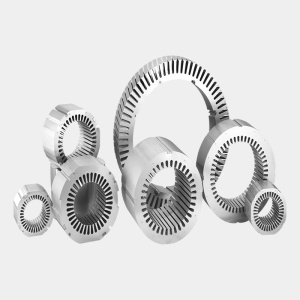
Статор и ротор двигателя NEV
Их классификация: Статор и Ротормнения: 274номер:Время выпуска: 2025-10-07 09:06:42Статор и ротор двигателя NEV: основные компоненты силовой установки электромобиляБыстрый рост транспортных средств на новой энергии (NEV) произвел революцию в автомобильной промышленности, причем электродвигатели сыграли ключевую роль в этой трансформации. В основе этих двигателей лежат два важнейших компонента: статор и ротор. Вместе они составляют основу электрических двигательных установок, преобразующих электрическую энергию в механическое движение. В этой статье рассматриваются конструкция, материалы, производственные процессы и характеристики статоров и роторов двигателей NEV, подчеркива...
новости
классификация:
Нет результатов поиска!
случай
классификация:
Нет результатов поиска!
видео
классификация:
Нет результатов поиска!
скачать
классификация:
Нет результатов поиска!
вербовка
классификация:
Нет результатов поиска!
Рекомендуемые продукты
Нет результатов поиска!
 Мобильный: +86 13738592999
 Телефон: +86(576) 89307999
 Электронная почта: sales@zjxinzheng.com
 Адрес: Прибрежный промышленный город, Саньмэнь.



 WhatsApp
 телефон