
 English
 한국어
한국어 Tiếng Việt
 中文
中文

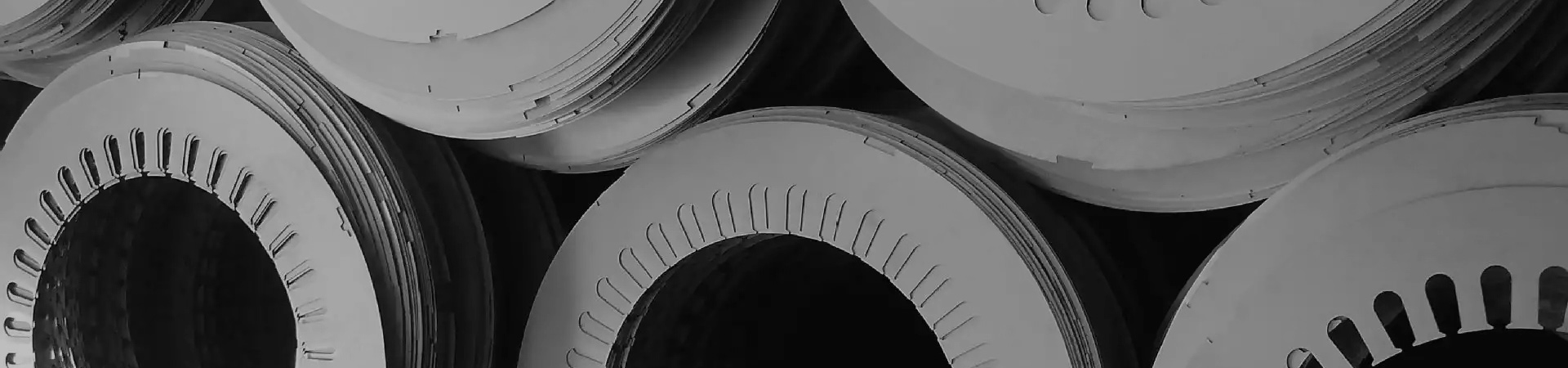
High-temperature resistant YE4 motor laminations design
Design of High-Temperature Resistant YE4 Motor Laminations The design of high-temperature resistant laminations for YE4 motors is critical to ensure optimal performance, energy efficiency, and durability under elevated operating conditions. These laminations must address thermal stability, core losses, and mechanical integrity while meeting stringent efficiency standards. Below are the key considerations in their design: 1. Material Selection The core material must exhibit low core losses and high thermal resistance. Silicon steel (electrical steel) with a high silicon content (typically 2-3%) is commonly used due to its excellent magnetic properties and reduced hysteresis losses. For high-temperature applications, grain-oriented or non-oriented silicon steel with improved thermal stability is preferred. Advanced coatings, such as inorganic insulation layers, are applied to minimize eddy current losses and withstand temperatures exceeding 200°C. 2. Lamination Thickness and Stacking Thinner laminations (typically 0.35mm or 0.5mm) reduce eddy current losses, but the trade-off between manufacturing complexity and performance must be balanced. The stacking process must ensure tight tolerances to prevent air gaps, which can increase magnetic reluctance and heat generation. Laser cutting or precision stamping is employed to maintain dimensional accuracy. 3. Insulation and Coating High-temperature-resistant insulation coatings, such as phosphate or ceramic-based layers, are applied to prevent interlamination short circuits. These coatings must remain stable under thermal cycling and mechanical stress. Additionally, oxidation-resistant treatments are used to protect the laminations in harsh environments. 4. Thermal Management Integration The lamination design should facilitate efficient heat dissipation. Ventilation slots or cooling ducts may be incorporated into the stator core to enhance airflow. The use of thermally conductive adhesives or bonding techniques can improve heat transfer from the core to the motor housing. 5. Mechanical Robustness High temperatures can cause thermal expansion, leading to deformation. The lamination design must account for thermal stress by selecting materials with matched coefficients of thermal expansion. Precision stacking and clamping mechanisms ensure structural integrity under thermal cycling. 6. Efficiency Optimization To meet IE4 efficiency standards, the core losses (hysteresis and eddy current losses) must be minimized. This involves optimizing the magnetic flux path, reducing harmonic losses, and ensuring uniform material properties. Finite element analysis (FEA) is often used to simulate performance under high-temperature conditions. Conclusion The design of high-temperature-resistant YE4 motor laminations requires a multidisciplinary approach, combining advanced materials, precision manufacturing, and thermal management strategies. By focusing on low-loss materials, robust insulation, and efficient cooling, these laminations can deliver reliable performance in demanding applications while maintaining energy efficiency. Future advancements may explore nanocrystalline alloys or hybrid materials for even higher temperature resistance and reduced losses.
продукт
классификация:
-
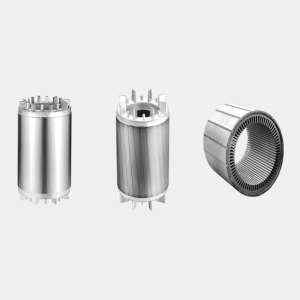
Электродвигатель Статор Ротор
Их классификация: Статор и Ротормнения: 115номер:Время выпуска: 2025-10-07 08:45:12Статор и ротор электродвигателя: основные компоненты электромеханических системЭлектродвигатели имеют основополагающее значение для современных технологий: они приводят в действие все: от бытовой техники до промышленного оборудования. В основе каждого электродвигателя лежат два важнейших компонента: статор и ротор. Эти части работают в тандеме, преобразуя электрическую энергию в механическое движение. Понимание их конструкции, функций и взаимодействия необходимо для понимания того, как работают электродвигатели.1. Введение в статор и ротор.Статор — это неподвижная часть электродвигателя, а рот...
новости
классификация:
Нет результатов поиска!
случай
классификация:
Нет результатов поиска!
видео
классификация:
Нет результатов поиска!
скачать
классификация:
Нет результатов поиска!
вербовка
классификация:
Нет результатов поиска!
Рекомендуемые продукты
Нет результатов поиска!
 Мобильный: +86 13738592999
 Телефон: +86(576) 89307999
 Электронная почта: sales@zjxinzheng.com
 Адрес: Прибрежный промышленный город, Саньмэнь.



 WhatsApp
 телефон