
 English
 한국어
한국어 Tiếng Việt
 中文
中文

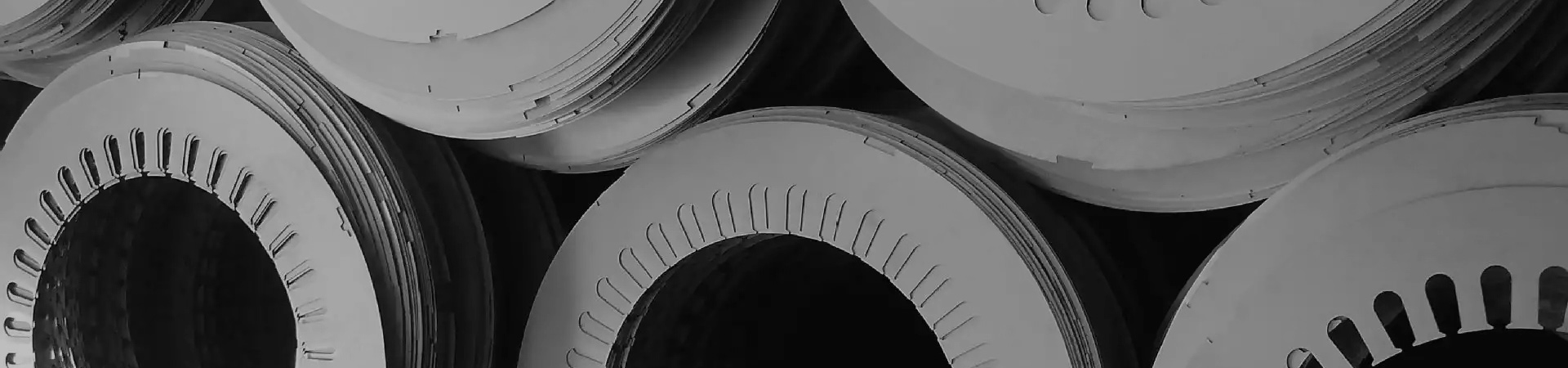
сердечник двигателя
Motor Core: An Essential Component in Electric Motors The motor core, also known as the stator or rotor core depending on its role, is a fundamental component in electric motors and generators. It serves as the magnetic circuit’s backbone, ensuring efficient energy conversion between electrical and mechanical forms. Constructed from laminated electrical steel sheets, the motor core minimizes energy losses caused by eddy currents and hysteresis, enhancing overall motor performance. Structure and Materials Motor cores are typically made of thin silicon steel laminations stacked together. These laminations are coated with an insulating layer to reduce eddy current losses, which occur when alternating magnetic fields induce circulating currents in the core. The use of high-permeability materials like non-oriented or grain-oriented electrical steel ensures optimal magnetic flux conduction while maintaining low core losses. The core’s shape varies based on motor type—such as induction, synchronous, or brushless DC motors. For stators, the core often features slots to hold copper windings, while rotor cores may include permanent magnets or conductive bars (in squirrel-cage rotors). Precision in lamination stacking is critical to maintaining consistent magnetic properties and mechanical stability. Manufacturing Process Producing a motor core involves several key steps: 1. Blanking/Punching: Electrical steel sheets are cut into desired shapes using dies or laser cutting. 2. Stacking and Bonding: Laminations are stacked and secured via welding, adhesives, or interlocking mechanisms. 3. Heat Treatment: Some cores undergo annealing to relieve stress and improve magnetic properties. 4. Coating/Insulation: Surface treatments prevent short circuits between laminations. 5. Assembly: The core is integrated with windings, magnets, or other motor components. Advanced techniques like segmented cores or soft magnetic composites (SMCs) are emerging to further reduce losses and simplify manufacturing. Performance and Applications A well-designed motor core directly impacts efficiency, torque density, and thermal management. Key performance metrics include: - Core Losses: Minimized through material selection and lamination thickness. - Magnetic Saturation: High-quality steel avoids flux density limits. - Mechanical Strength: Robust construction withstands centrifugal forces and vibrations. Motor cores are vital in industries ranging from automotive (EV traction motors) to appliances (fans, compressors) and industrial machinery (pumps, robotics). As demand for high-efficiency motors grows, innovations in core design—such as hybrid or amorphous metal cores—continue to push performance boundaries. In summary, the motor core is a precision-engineered component that balances magnetic efficiency, thermal stability, and mechanical durability. Its optimization is crucial for advancing modern electric motor technology.
продукт
классификация:
Нет результатов поиска!
новости
классификация:
-
[Industry News]Как выбрать правильный сердечник двигателя для вашего примен...
2025-09-30 16:10:20 -
[Industry News]Будущее материалов для сердечников двигателей в сфере устойч...
2025-10-07 17:01:25
случай
классификация:
Нет результатов поиска!
видео
классификация:
Нет результатов поиска!
скачать
классификация:
Нет результатов поиска!
вербовка
классификация:
Нет результатов поиска!
Рекомендуемые продукты
Нет результатов поиска!
 Мобильный: +86 13738592999
 Телефон: +86(576) 89307999
 Электронная почта: sales@zjxinzheng.com
 Адрес: Прибрежный промышленный город, Саньмэнь.



 WhatsApp
 телефон