
 English
 한국어
한국어 Tiếng Việt
 中文
中文

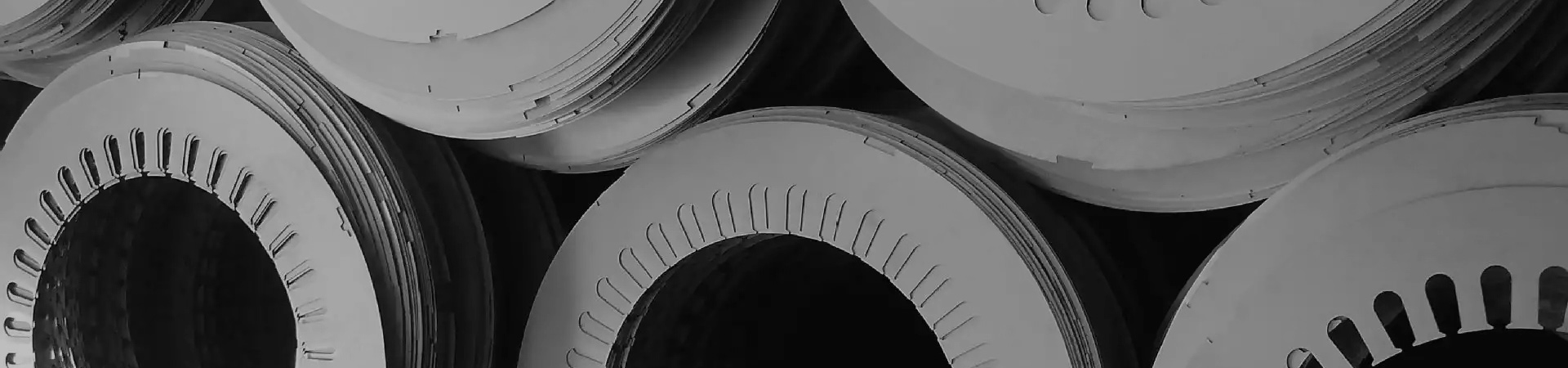
оптимизация NVH статора двигателя
Motor Stator NVH Optimization Noise, vibration, and harshness (NVH) in electric motor stators significantly impact performance, efficiency, and user comfort. Optimizing stator design to minimize NVH involves addressing electromagnetic, mechanical, and structural factors. Below are key approaches for NVH reduction in motor stators: 1. Electromagnetic Force Reduction The primary source of stator vibration stems from electromagnetic forces, particularly radial and tangential components. Key strategies include: - Pole-Slot Combination Optimization: Selecting appropriate pole and slot numbers to minimize harmonic content in the air-gap magnetic field, reducing force ripple. - Skewing Techniques: Implementing skewed slots or magnets to smooth out torque ripple and mitigate cogging torque, lowering vibration. - Winding Configuration: Using distributed windings or fractional-slot designs to reduce spatial harmonics and unbalanced magnetic pull. 2. Structural Damping and Stiffness Enhancement Stator vibration is amplified if structural resonance occurs. Solutions include: - Core Material Selection: Laminated steel with high magnetic permeability and low magnetostriction reduces vibration. - Stator Core Segmentation: Splitting the core into segments with damping layers (e.g., adhesives) can attenuate vibration propagation. - Stator Housing Design: Reinforcing the housing with ribs or optimizing its geometry improves stiffness, shifting natural frequencies away from excitation ranges. 3. Manufacturing and Assembly Precision Imperfections in stator fabrication exacerbate NVH issues. Critical measures include: - Tight Tolerance Control: Ensuring uniform air gaps and symmetrical winding distribution minimizes unbalanced forces. - Press-Fit and Bonding Quality: Proper interference fits between the stator core and housing reduce relative motion and micro-vibrations. - Balanced Rotor-Stator Alignment: Precise assembly prevents eccentricity-induced vibrations. 4. Active and Passive Damping Techniques - Passive Damping: Adding viscoelastic materials or constrained-layer damping to the stator structure absorbs vibrations. - Active Control: Implementing real-time vibration compensation via control algorithms (e.g., harmonic current injection) can counteract force excitations. 5. Simulation and Testing - Finite Element Analysis (FEA): Simulating electromagnetic-structural coupling helps identify critical vibration modes. - Modal Testing: Validating stator dynamics through experimental modal analysis ensures design robustness. Conclusion Effective NVH optimization in motor stators requires a multidisciplinary approach, combining electromagnetic design, structural dynamics, and precision manufacturing. By addressing force harmonics, enhancing damping, and ensuring assembly accuracy, significant NVH improvements can be achieved, leading to quieter, more reliable motors.
продукт
классификация:
Нет результатов поиска!
новости
классификация:
-
[Industry News]Распространенные неисправности статора двигателя и стратегии...
2025-10-07 17:08:54
случай
классификация:
Нет результатов поиска!
видео
классификация:
Нет результатов поиска!
скачать
классификация:
Нет результатов поиска!
вербовка
классификация:
Нет результатов поиска!
Рекомендуемые продукты
Нет результатов поиска!
 Мобильный: +86 13738592999
 Телефон: +86(576) 89307999
 Электронная почта: sales@zjxinzheng.com
 Адрес: Прибрежный промышленный город, Саньмэнь.



 WhatsApp
 телефон