
 English
 한국어
한국어 Tiếng Việt
 中文
中文

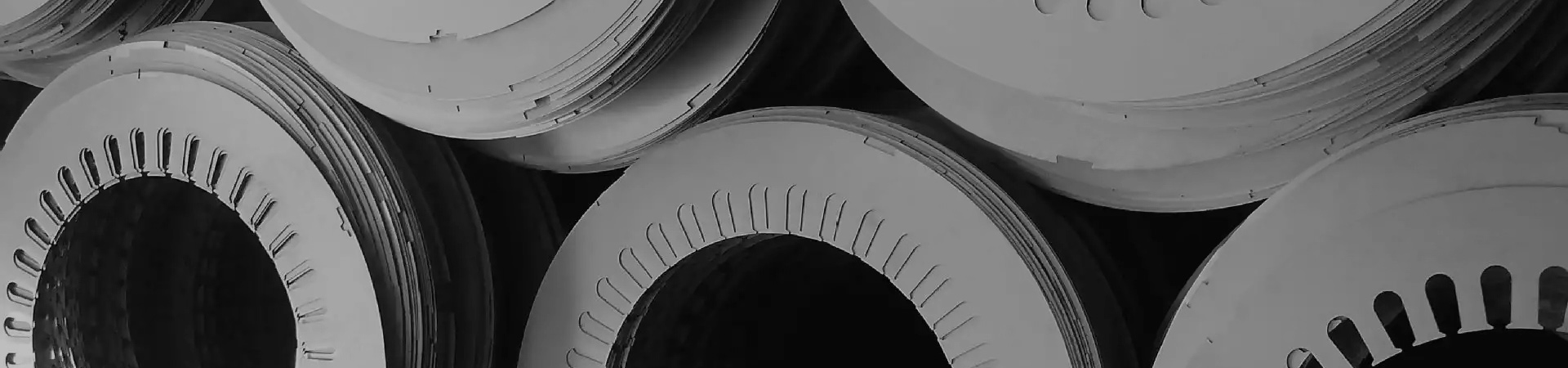
ламинирование ротора
Rotor Lamination: Design, Materials, and Applications Rotor lamination is a critical component in electric motors and generators, playing a vital role in energy conversion efficiency, heat dissipation, and electromagnetic performance. The rotor, which rotates within the stator, consists of stacked laminations made from thin electrical steel sheets. These laminations are insulated and bonded together to minimize energy losses and enhance motor performance. Design and Manufacturing Rotor laminations are precision-engineered with specific geometric features such as slots, poles, and ventilation holes. The design depends on the motor type (e.g., induction, synchronous, or permanent magnet motors). Key considerations include: - Slot Geometry: Influences magnetic flux distribution and winding placement. - Pole Configuration: Determines motor speed and torque characteristics. - Thickness and Stacking: Laminations are typically 0.2–0.7 mm thick to reduce eddy current losses. Manufacturing involves stamping or laser cutting thin steel sheets, followed by insulation coating (e.g., varnish or oxide layers) to prevent interlamination short circuits. Advanced techniques like progressive die stamping ensure high precision and consistency. Material Selection Electrical steel (silicon steel) is the most common material due to its high magnetic permeability and low core losses. Key properties include: - Low Hysteresis Loss: Minimizes energy dissipation during magnetization cycles. - High Resistivity: Reduces eddy currents. - Thermal Stability: Maintains performance under high operating temperatures. Some high-performance applications may use amorphous metals or powdered cores for further efficiency gains. Performance Benefits Laminated rotors offer several advantages: 1. Reduced Eddy Currents: Insulation between layers prevents circulating currents, lowering heat generation. 2. Improved Efficiency: Optimized magnetic flux paths enhance energy conversion. 3. Lower Noise and Vibration: Laminations dampen electromagnetic vibrations. 4. Thermal Management: Ventilation holes facilitate cooling. Applications Rotor laminations are used in: - Industrial Motors: For pumps, compressors, and conveyors. - Automotive: Electric vehicle (EV) traction motors. - Renewable Energy: Wind turbine generators. - Household Appliances: Fans, washing machines, and HVAC systems. Future Trends Advancements in materials (e.g., high-silicon steels) and manufacturing (laser cutting, additive manufacturing) aim to further reduce losses and improve power density. In summary, rotor lamination is a fundamental technology enabling efficient, reliable, and high-performance electric machines across industries. Its design and material innovations continue to drive progress in electrification and energy efficiency.
продукт
классификация:
Нет результатов поиска!
новости
классификация:
-
[Industry News]Почему ламинирование двигателя снижает потери на вихревые то...
2025-10-07 16:41:51
случай
классификация:
Нет результатов поиска!
видео
классификация:
Нет результатов поиска!
скачать
классификация:
Нет результатов поиска!
вербовка
классификация:
Нет результатов поиска!
Рекомендуемые продукты
Нет результатов поиска!
 Мобильный: +86 13738592999
 Телефон: +86(576) 89307999
 Электронная почта: sales@zjxinzheng.com
 Адрес: Прибрежный промышленный город, Саньмэнь.



 WhatsApp
 телефон